
Guide To Study in Australia in 2027
Australia has consistently remained one of the most preferred destinations for Indian students seeking a world-class education, global career opportunities, and an internationally recognized degree. Whether you are a Class 12 student planning your undergraduate studies, a graduate looking for a master’s degree, or a working professional aiming to enhance your career prospects, Australia offers exceptional opportunities across diverse fields of study.
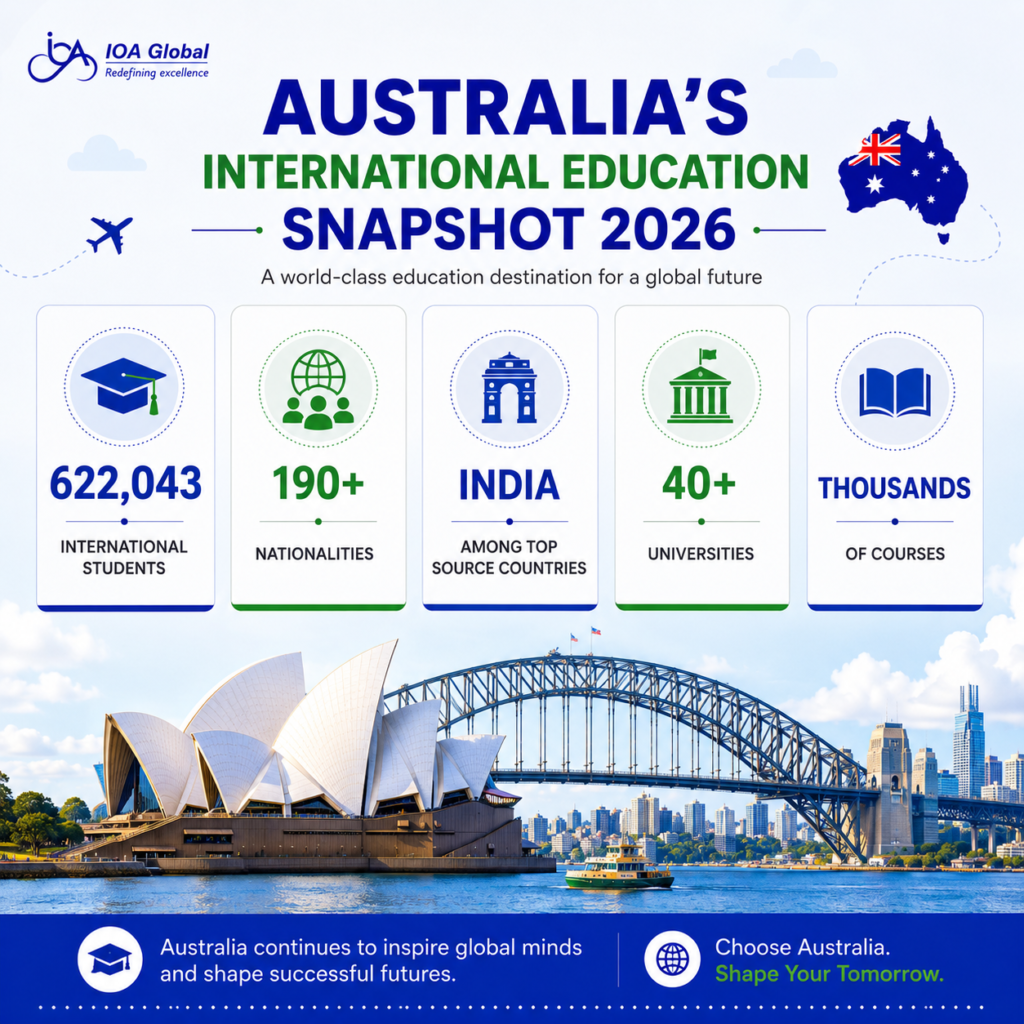
Today, Australia is home to hundreds of thousands of international students from more than 190 countries. According to Australia’s Department of Education, more than 622,000 international students were studying in Australia during the first two months of 2026, making it one of the world’s largest international education destinations. The higher education sector continues to show growth despite changes in international education policies.
Indian students continue to be one of the largest international student communities in Australia. Recent international education data shows that well over 100,000 Indian students are enrolled across Australian institutions, and India remains one of Australia’s most important education partners.
So why do thousands of Indian students choose to study in Australia every year? The answer goes beyond just education. Australia offers globally ranked universities, industry-focused learning, strong research opportunities, generous post-study work rights, multicultural communities, excellent quality of life, and attractive pathways for long-term career growth. Many graduates find employment opportunities in sectors such as Information Technology, Engineering, Healthcare, Business, Finance, Education, Data Science, Artificial Intelligence, Cybersecurity, and Construction.
Another major advantage of Australia Education is the balance between academic excellence and practical learning. Unlike many education systems that focus primarily on theory, Australian universities emphasize industry exposure, internships, real-world projects, and employability skills. This helps students become job-ready from day one.
For Indian families, Australia also provides a clear and structured education pathway. Students can progress from diploma programs to bachelor’s degrees, master’s programs, and research qualifications while benefiting from internationally recognized qualifications under the Australian Qualifications Framework (AQF). However, studying abroad is a major investment, and choosing the right destination requires careful planning.
Students often ask:
- Is Australia better than the UK, Germany, Ireland, or New Zealand?
- What are the best universities in Australia?
- How much does it cost to study in Australia in 2027?
- Can average students get admission?
- What scholarships are available?
- Is an education loan necessary?
- What are the visa requirements?
- Can students work part-time while studying?
- What are the PR opportunities after graduation?
- Which courses offer the best return on investment?
This comprehensive guide answers all these questions and more.
As experienced Study in Australia Consultants working with Indian students for over a decade, we have observed that students who make informed decisions early in their journey are far more likely to secure admission, scholarships, visa approval, and successful career outcomes. Whether you are searching for reliable Study in Australia Consultants in Delhi, or simply looking for accurate information about Australia Education, this guide has been designed to help you make confident decisions for your future.
In this guide, you will learn:
- Education system in Australia
- Intakes and application timelines
- Group of Eight and top Australian universities
- Best courses for Indian students
- Tuition fees and living expenses
- Eligibility criteria
- Scholarships and financial aid
- Education loans
- Student visa process
- Accommodation options
- Part-time work opportunities
- Career prospects after graduation
- Return on Investment (ROI)
- Permanent Residency (PR) pathways
- How to choose the best Study in Australia Consultants in Delhi
Let’s begin by understanding why Australia continues to be one of the strongest destinations for international education in 2027.
Why Study in Australia in 2027?
For Indian students exploring international education opportunities, Australia continues to be one of the strongest destinations in 2027. The country combines globally recognized universities, practical learning, post-study work opportunities, a high standard of living, and strong graduate employability.
While countries such as the UK, Germany, Ireland, and New Zealand remain attractive options, Australia offers a unique balance of academic excellence, career growth, and student experience that appeals to undergraduate students, postgraduate applicants, and working professionals alike.
Australia Is One of the World’s Leading Education Destinations
According to the Australian Government’s Department of Education, more than 622,000 international students were studying in Australia during the first two months of 2026. International students from India represent one of the largest student communities in the country, accounting for approximately 16% of all international students in Australia.
This demonstrates Australia’s continued popularity among students seeking globally recognized qualifications and international career opportunities.
World-Class Universities Recognized Globally
One of the biggest reasons students choose Australia Education is the quality of its universities. Australia is home to some of the world’s highest-ranked universities, many of which consistently appear in global rankings such as QS World University Rankings and Times Higher Education Rankings.
The prestigious Group of Eight (Go8) universities are considered Australia’s equivalent of the Ivy League or the UK’s Russell Group. The Group of Eight includes:
- University of Melbourne
- University of Sydney
- UNSW Sydney
- Australian National University (ANU)
- Monash University
- University of Queensland
- University of Western Australia
- Adelaide University
Collectively, these universities account for approximately 70% of Australia’s university research output and educate hundreds of thousands of students annually.For students interested in research, innovation, engineering, business, healthcare, technology, and data science, Go8 universities remain among the strongest options globally.
Industry-Focused Education That Makes You Job Ready
One of the biggest differences between Australia and many other study destinations is its focus on practical learning. Australian universities place strong emphasis on:
- Internships
- Industry projects
- Work-integrated learning
- Research collaboration
- Professional placements
- Real-world problem solving
Rather than focusing solely on theoretical knowledge, students gain skills that employers actively seek. This approach is particularly beneficial for students pursuing:
- Information Technology
- Artificial Intelligence
- Cybersecurity
- Data Science
- Engineering
- Nursing
- Healthcare
- Construction Management
- Business Analytics
- Finance
Employers often value Australian graduates because they have already worked on industry-relevant projects before entering the workforce.
Post-Study Work Opportunities
Another major reason students choose to Study in Australia is the opportunity to gain international work experience after graduation. Australia’s Temporary Graduate Visa (Subclass 485) allows eligible graduates to remain in Australia and work after completing their studies. Depending on the qualification completed, graduates may be eligible for post-study work opportunities that help them gain valuable international experience and improve their long-term career prospects.
For many Indian students, this provides an opportunity to:
- Build international work experience
- Recover educational investment
- Develop professional networks
- Strengthen career prospects globally
Ability to Work While Studying
International students in Australia can also work part-time during their studies. Current regulations generally allow eligible student visa holders to work up to 48 hours per fortnight during study periods and unlimited hours during scheduled breaks.
This helps students:
- Reduce living expenses
- Gain local work experience
- Build communication skills
- Develop professional networks
Popular student jobs include:
- Retail Assistant
- Customer Service Representative
- Hospitality Staff
- Tutor
- Administrative Assistant
- Warehouse Associate
Many students use part-time work to offset accommodation, food, transportation, and personal expenses.
High Quality of Life
Australia consistently ranks among the world’s most desirable places to live. International students benefit from:
- Modern infrastructure
- High safety standards
- Multicultural communities
- Quality healthcare
- Public transport systems
- Student support services
Australia’s welcoming and diverse culture makes it easier for Indian students to adapt and build a comfortable life abroad. Popular student cities include:
- Sydney
- Melbourne
- Brisbane
- Perth
- Adelaide
- Canberra
- Gold Coast
Each city offers unique advantages in terms of lifestyle, affordability, employment opportunities, and university options.
Strong Demand for Skilled Professionals
Australia continues to experience demand across several high-growth sectors. Some of the most promising fields for graduates include:
Technology
- Software Development
- Cybersecurity
- Cloud Computing
- Data Science
- Artificial Intelligence
Healthcare
- Nursing
- Public Health
- Allied Health
- Aged Care
Engineering
- Civil Engineering
- Mechanical Engineering
- Electrical Engineering
- Mining Engineering
Business
- Finance
- Accounting
- Business Analytics
- Supply Chain Management
Education
- Early Childhood Education
- Secondary Teaching
- Special Education
Students who choose courses aligned with labour market demand often enjoy stronger employment outcomes after graduation.

Multicultural Environment for Indian Students
Australia is one of the most culturally diverse countries in the world. Indian students can easily find:
- Indian communities
- Cultural associations
- Religious centers
- Indian restaurants
- Student support networks
This creates a smoother transition and helps students feel at home while adapting to a new country. For first-time international students, this support system often plays an important role in academic and personal success.
Is Australia Worth It in 2027?
The answer depends on your goals. If you are looking for:
✓ Globally recognized qualifications
✓ Top-ranked universities
✓ Practical and industry-focused education
✓ International work experience
✓ Strong graduate employability
✓ Scholarship opportunities
✓ Long-term career growth
Then Australia remains one of the strongest study destinations available to Indian students in 2027. However, Australia is not necessarily the best option for every student. Your academic profile, budget, career goals, work experience, and long-term plans should all be considered before making a decision. This is why experienced Study in Australia Consultants help students identify the most suitable university, course, city, and pathway based on individual goals rather than rankings alone.
Australia Intakes in 2027: Which Intake Should You Choose?
One of the biggest advantages of choosing to Study in Australia is the flexibility offered by its higher education system. Unlike many countries that have a single annual admission cycle, Australian universities generally offer multiple intakes throughout the year, allowing international students to begin their studies based on course availability and personal readiness.
Most universities have two major intakes- February (Semester 1) and July (Semester 2), while some institutions also offer a third intake between September and November (commonly referred to as Semester 3 or Trimester 3) for selected programmes. The availability of courses varies by university, so students should always check the official admissions calendar of their chosen institution before applying.
February Intake (Semester 1)
- Primary and Most Popular Admission Cycle in Australia
- Widest selection of undergraduate, postgraduate, and research programmes across universities
- Highest number of scholarship opportunities and campus activities
- Preferred choice for Indian students planning to study abroad
- Application deadlines often close several months before classes commence
- Early planning essential
July Intake (Semester 2)
- Second-largest admission cycle
- Offered by most Australian universities
- Excellent option for students who require additional time to improve their academic profile, complete English language proficiency tests such as IELTS or PTE Academic, arrange finances, or gather the necessary documents for admission and visa applications
- Many popular programmes in Business, Engineering, Information Technology, Data Science, Healthcare, and Education remain available during this intake.
September-November Intake (Semester 3)
- Offered by some Australian universities for select courses
- Comparatively smaller
- Limited programme availability
- Generally suitable for students applying to specific universities or pathway programmes
- Before choosing this intake, applicants should confirm course availability and commencement dates directly with the university.
When Should You Start Applying?
Regardless of the intake you choose, it is advisable to begin your application process 6 to 12 months in advance. Starting early gives you sufficient time to shortlist universities, prepare for IELTS, PTE Academic or other accepted English language tests, gather academic documents, apply for scholarships, arrange finances, and complete the Australian Student Visa (Subclass 500) process. Early preparation also increases your chances of securing admission to your preferred university and meeting application deadlines comfortably.
Tuition Fees & Living Expenses in Australia
Understanding the overall cost of studying is an important part of planning your journey to Study in Australia. While Australia offers world-class education and excellent career opportunities, the total cost depends on factors such as your chosen university, course, city of residence, lifestyle, and accommodation preferences. Besides tuition fees, students should also budget for accommodation, food, transport, health insurance, study materials, and other personal expenses. Proper financial planning can help you choose the right university while exploring scholarships, education loans, and part-time work opportunities to manage your expenses effectively.
Tuition Fees in Australia
Tuition fees for international students vary depending on the level of study and the programme you choose. Courses such as Medicine, Veterinary Science, and Dentistry generally have higher tuition fees than Business, Humanities, or Education programmes.
| Level of Study | Average Annual Tuition Fees (AUD) |
| Diploma & Certificate | 15,000-30,000 |
| Bachelor’s Degree | 20,000-45,000 |
| Master’s Degree | 22,000-50,000 |
| Doctoral (PhD) | 20,000-45,000* |
*Many research students receive scholarships or government-funded research support that may partially or fully cover tuition fees.
Living Expenses in Australia
In addition to tuition fees, students should budget for everyday living expenses. The Australian Government notes that living costs vary depending on your study location, accommodation choice, and lifestyle. Major cities such as Sydney and Melbourne generally have higher living costs than regional cities like Adelaide, Hobart, or Townsville. The official Study Australia website also provides a Cost of Living Calculator to help students estimate their expected expenses before arriving in Australia.
| Expense Category | Estimated Monthly Cost (AUD) |
| Accommodation | 900-2,000 |
| Food & Groceries | 300-700 |
| Transport | 120-250 |
| Utilities & Internet | 150-300 |
| Mobile Phone | 30-70 |
| Personal Expenses | 250-600 |
Apart from tuition and living expenses, students should also account for one-time costs such as the Student Visa (Subclass 500) application fee, Overseas Student Health Cover (OSHC), flight tickets, and study materials. Creating a realistic financial plan before applying not only helps you select universities that fit your budget but also ensures a smoother transition to student life in Australia.
Eligibility Criteria to Study in Australia
Australian universities assess applicants based on their
- Academic qualifications
- English language proficiency
- Other supporting documents.
While admission requirements vary by university and programme, students applying for undergraduate courses are generally expected to have completed Class 12 or an equivalent qualification, whereas postgraduate applicants must hold a recognised bachelor’s degree in a relevant field. Certain programmes, such as MBA, Medicine, Law, or specialised Health Sciences, may also require relevant work experience or additional entry requirements.
International students are typically required to demonstrate English language proficiency through recognised tests such as,
- IELTS Academic
- PTE Academic
- TOEFL iBT
Accepted scores vary by institution and course. In addition to academic transcripts and English language test results, universities may request documents such as,
- Statement of Purpose (SOP)
- Letters of Recommendation (LORs)
- Updated CV or résumé
- Portfolio for creative programmes
Some universities may also issue conditional offers, allowing students to submit final academic results or English language scores at a later stage. Since admission policies differ across institutions, applicants should always refer to the official university website before applying.
Scholarships to Study in Australia
Australia offers a wide range of scholarships that can significantly reduce the cost of higher education for international students. Funding is available through the Australian Government, universities, and external organisations, with scholarships awarded based on-
- Academic merit
- Leadership potential
- Research excellence
- Programme-specific criteria
While some scholarships provide partial tuition fee waivers, others may cover tuition fees, living expenses, Overseas Student Health Cover (OSHC), and travel costs.
Some of the most recognised scholarship programmes include-
- Australia Awards Scholarships
- Research Training Program (RTP)
for eligible research master’s and doctoral students. In addition, most Australian universities offer merit-based scholarships for international students, with eligibility requirements and award values varying by institution. Since scholarship deadlines often differ from university admission deadlines, students are encouraged to begin their applications early and regularly check the official scholarship pages of their preferred universities.
Financial Aid for Indian Students
In addition to scholarships, Indian students have several options to finance their education in Australia. Many students combine personal savings, education loans, scholarships, and part-time employment to manage tuition fees and living expenses. Indian banks and recognised non-banking financial companies (NBFCs) offer education loans that may cover tuition fees, accommodation, travel expenses, study materials, and other approved educational costs, subject to the lender’s terms and eligibility criteria.
International students may also work while studying, provided they comply with the conditions of their Australian student visa. Income from part-time work can help cover everyday living expenses, although it should not be considered the primary source of funding for tuition or long-term educational costs. Creating a realistic financial plan before applying- including tuition fees, accommodation, health insurance, visa charges, and other living expenses, can help students make informed decisions and ensure a smoother study abroad experience.
Education Loans to Study in Australia
For many Indian students, an education loan is an effective way to finance higher education in Australia. Several public sector banks, private banks, and Non-Banking Financial Companies (NBFCs) offer overseas education loans that can help cover tuition fees and other study-related expenses. Depending on the lender and your eligibility, loans may be available on a secured (with collateral) or unsecured (without collateral) basis, with the sanctioned amount determined by factors such as the university, course, repayment capacity, and financial profile.
Most education loans for studying in Australia can cover a wide range of expenses, including:
- Tuition fees
- Accommodation and living expenses
- Airfare and travel expenses
- Books, laptops, and study materials
- Overseas Student Health Cover (OSHC)
- Examination, laboratory, and other approved academic expenses
Before applying for a loan, students should compare lenders based on interest rates, processing fees, repayment tenure, moratorium period, and collateral requirements. It is equally important to choose a recognised Australian institution, as many lenders consider the university’s reputation and programme while assessing loan applications. Public sector banks such as the State Bank of India (SBI) offer overseas education loan schemes like Global Ed-Vantage, while several private banks and NBFCs also provide customised financing solutions for eligible students.
To apply for an education loan, students generally need an admission or offer letter from a recognised Australian institution, academic records, proof of identity and address, income documents of the co-applicant, and other documents specified by the lender. Since loan approval and disbursement may take several weeks, students are advised to begin the financing process soon after receiving their university offer. Planning early ensures sufficient time to meet university payment deadlines and complete the student visa application smoothly.
Australia Student Visa (Subclass 500): Application Process
International students planning to Study in Australia must apply for the Student Visa (Subclass 500), which allows them to undertake full-time study at a CRICOS-registered education institution. Depending on the course, the visa generally permits students to stay in Australia for the duration of their programme and provides eligible work rights in accordance with current visa conditions. All applications are submitted online through the Australian Government’s ImmiAccount portal and are assessed by the Department of Home Affairs.
Step 1: Receive Your Letter of Offer
Once your application to an Australian university is successful, you will receive an offer letter outlining your course details, tuition fees, enrolment conditions, and payment requirements. Carefully review the terms before accepting the offer and paying the required deposit.
Step 2: Obtain Your Confirmation of Enrolment (CoE)
After accepting the offer and meeting the university’s admission requirements, your institution will issue a Confirmation of Enrolment (CoE). This document confirms your enrolment in a CRICOS-registered course and is a mandatory requirement for your Student Visa (Subclass 500) application.
Step 3: Gather the Required Documents
Before lodging your visa application, ensure you have all the necessary supporting documents, including:
- Valid passport
- Confirmation of Enrolment (CoE)
- English language proficiency test results (if applicable)
- Genuine Student (GS) statement
- Proof of financial capacity
- Overseas Student Health Cover (OSHC)
- Health examination and police clearance (if required)
- Academic transcripts and other supporting documents requested by the Department of Home Affairs.
Step 4: Submit Your Visa Application
Create an ImmiAccount on the Department of Home Affairs website and complete your Student Visa (Subclass 500) application online. Upload all required documents, pay the applicable visa application charge, and submit your application for assessment. Incomplete or inaccurate applications may result in processing delays.
Step 5: Complete Health and Character Requirements
Depending on your circumstances, you may be required to undergo a medical examination with an approved panel physician and provide police clearance certificates to satisfy Australia’s health and character requirements. You should complete these requirements promptly if requested to avoid unnecessary delays in visa processing.
Step 6: Await Your Visa Decision
Processing times vary depending on factors such as your education sector, the completeness of your application, and application volumes. The Department of Home Affairs recommends applying well in advance of your course commencement date and checking current processing times through its official visa processing portal. Once your application is approved, you will receive a Visa Grant Notice outlining your visa conditions, validity period, and work rights.
Not sure if Australia is the right destination for you?
Get a Free Australia Eligibility Assessment and University Shortlisting Session with experienced Australia Education Consultants in Delhi. Our counsellors can help you compare Australia, the UK, Germany, Ireland, and New Zealand based on your academic profile, budget, and career goals.

Leave A Comment